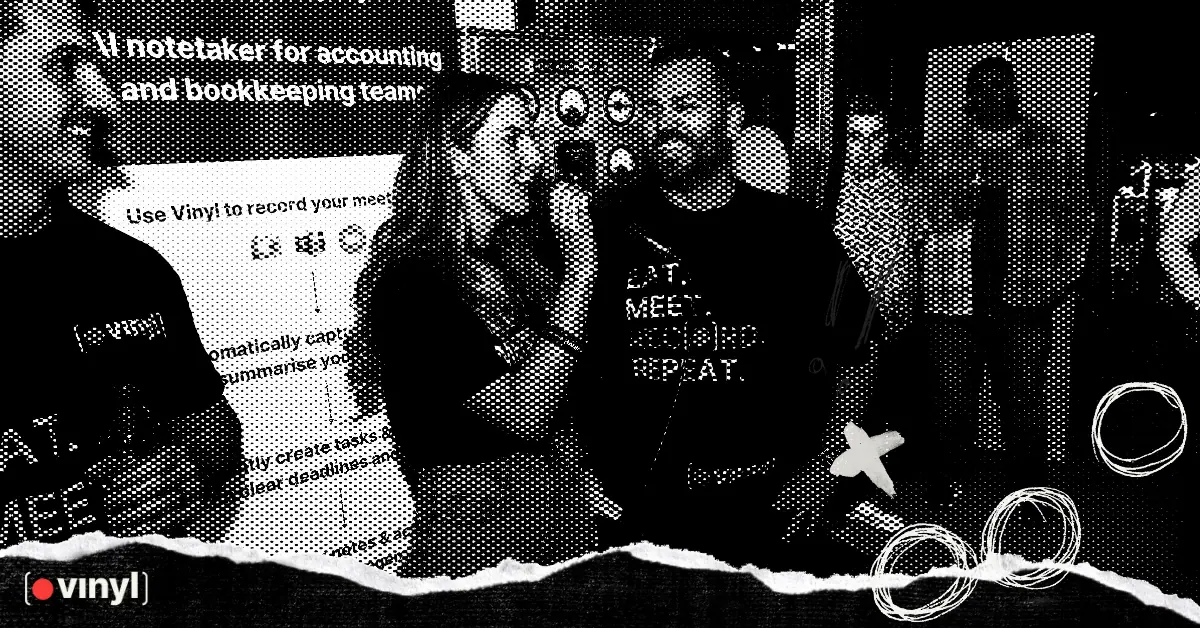
Looking for Vinyl, the AI notetaker for accountants? It lives at usevinyl.com. This post is the story of how we launched it.
How we created hype, demand, and real ROI — Before day one.
Most SaaS founders wait.They wait for the product to be perfect. Wait for all the bugs to be fixed. Wait until “everything’s ready.”
Then launch day arrives… and nothing happens.
We took a different route with Vinyl, a new meeting AI tool built specifically for accountants and bookkeepers.
At Journey, we’re the go-to-market agency powering Vinyl’s growth - and from day one, we knew the goal wasn’t just to launch a product. It was to build awareness, create demand, and get the right firms lining up before we ever went live.**Vinyl **is an AI notetaker for accountants and bookkeepers. This is a SaaS product we’re bootstrapping alongside the work we do at Journey. This blog is a case study on what we’ve been doing so far to help Vinyl become a known brand in the industry in a short period of time.
We didn’t wait for perfect. We launched with momentum.Here’s exactly how we did it - step-by-step - and how you can do the same.Consider working with Journey this year if you’re looking to replicate these kinds of results.
TL;DR
- We built demand before day one. Journey took Vinyl — an AI notetaker for accountants and bookkeepers — to market with momentum long before the product was “ready”.
- Announce early, build in public. We led with the problem, not the features, shared progress every week, and ran a survey 200+ people completed to co-create the product.
- The waitlist earned its keep. Public milestones — 50, 100, 200, all the way to 320+ signups — became social proof that fuelled more growth.
- We picked a moment and owned it. The Digital Accountancy Show London 2025 was the flag in the ground, primed by a 240+ RSVP pre-conference party and 180+ stand scans on the day.
- Zero ads, real traction. 100,000+ organic impressions and weekly partner referrals from top-100 firms and global networks — all before public launch.
1. We announced it before it was ready
Most people wait until they’ve got a polished product and a full demo before they talk publicly. We didn’t.
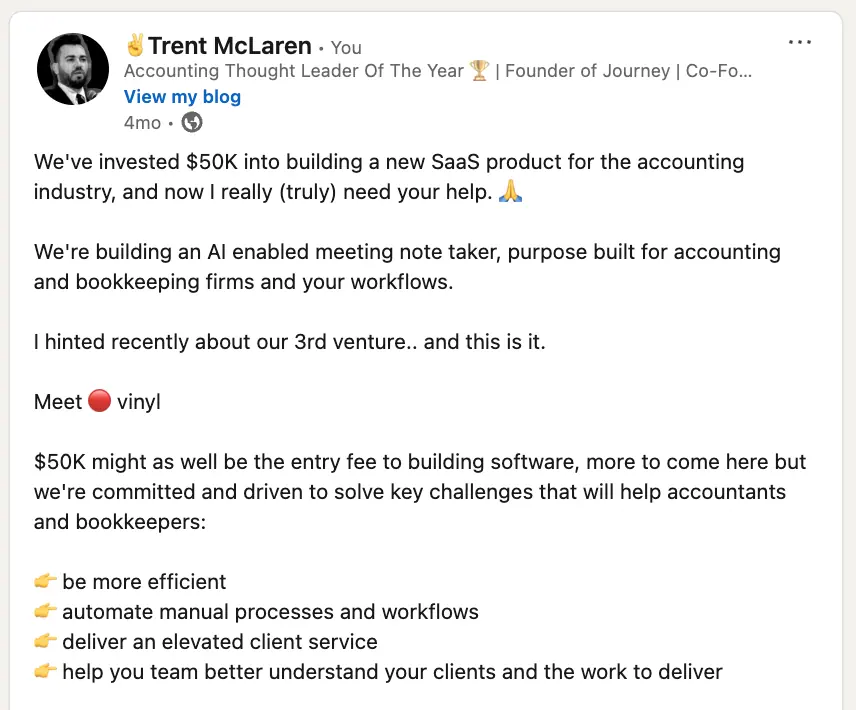
In late 2024, Vinyl was still just an idea — a concept scribbled out on slides and whiteboards. But instead of keeping it under wraps, we decided to go public. We started talking about what we were building and why it mattered.
Vinyl is a meeting tool made for accountants and bookkeepers. It records your calls, creates summaries, pulls out action items, and turns meetings into usable, trackable outputs — so nothing gets lost and no one wastes time rewriting notes or chasing clients.
But instead of focusing on all those features upfront, we led with the problem:
“Accountants are spending hours after every meeting chasing actions and writing follow-up emails. What if you never had to do that again?”
That message landed. It wasn’t about AI, automation, or fancy dashboards. It was about giving accounting professionals their time back.
The reaction was immediate: DMs, comments, shares. People tagged their team members. Early adopters started following the journey and asking when they could try it.
We didn’t have a product yet — but we had interest, conversations, and market pull. All because we told people what we were solving, not what we were building.
Lesson: Don’t wait for perfect. Start the conversation early. Talk about the pain, not the product.
2. We built in public
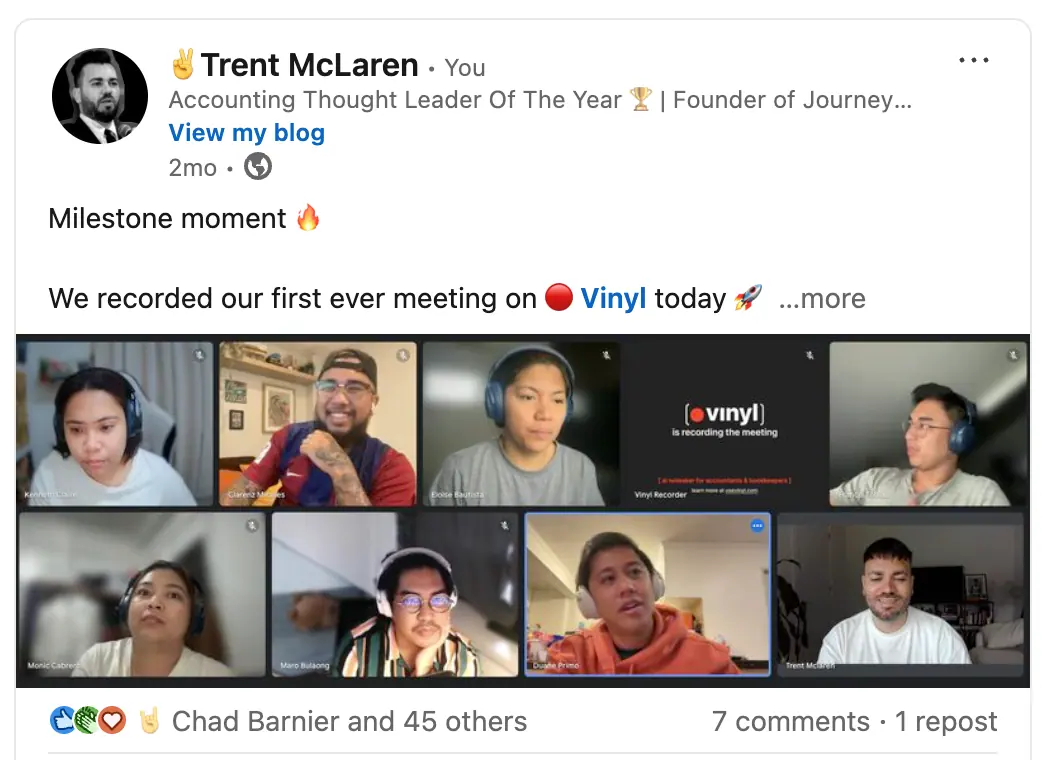
Once we’d announced Vinyl, we didn’t disappear for six months to go build it behind closed doors. We kept the conversation going — and brought people along for the ride.
Every week, we shared something.Sometimes it was a new screen design.Sometimes it was a progress update, a brand direction, or a question we were still figuring out.Sometimes it was us being honest about what wasn’t working.
We didn’t overthink the content. It was raw, real, and consistent. That was the point. It showed we were actually doing the work, not just hyping something that didn’t exist.
People started to engage. They replied with feedback. They tagged colleagues. They started to feel like they were in on something early — because they were.
One of the smartest moves we made during this phase was launching a problem validation survey. Over 200 people took the time to fill it out. It wasn’t just valuable research — it was another opportunity to build trust and involvement.
That feedback shaped how Vinyl works. It influenced our roadmap, our messaging, and even how we structured the user journey. Because we weren’t guessing — we were co-creating it with the people who’d eventually use it.
And the side effect of all this? The audience grew. We weren’t shouting into the void. We were building a community that cared about the outcome and wanted to be there on launch day.
Lesson: Building in public builds both a better product and a more invested audience. Don’t just share the wins — share the journey.
3. We gave the waitlist a reason to exist
We’ve all seen those empty waitlist pages with a single line of text and a form. Most of the time, they don’t convert — because they don’t mean anything.
From day one, we knew if we were going to create a waitlist, it had to have purpose.
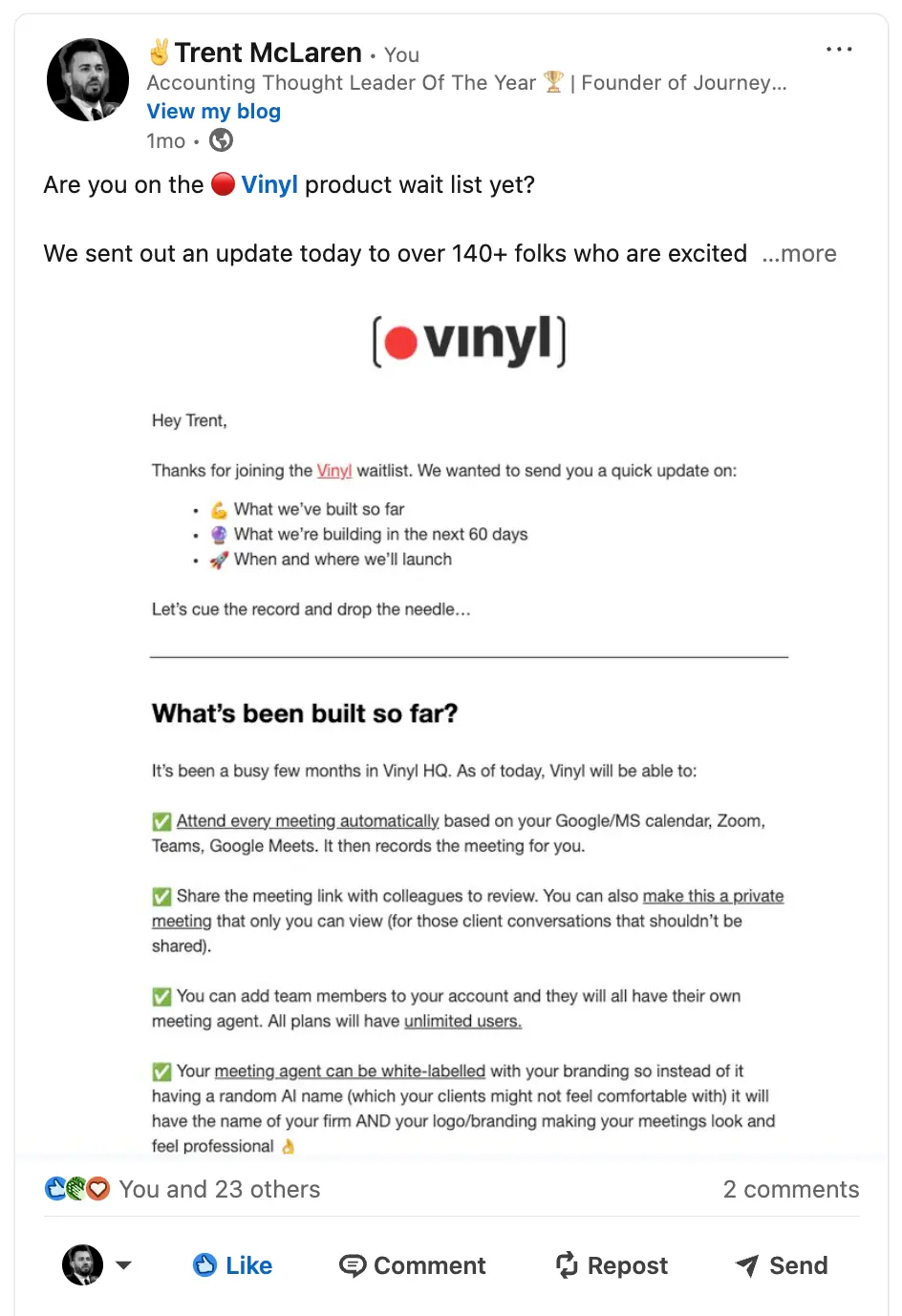
So when we launched the Vinyl waitlist, we told people exactly what they were signing up for:Early access to the product.The chance to help shape features.A seat at the table as we solved one of the biggest admin headaches in the industry.
And we didn’t just launch it and move on. We made it part of the narrative.
Each week, we shared updates about how many people had joined.We celebrated hitting milestones: 50 signups, 100, 200… all the way to 320+.That public momentum acted as social proof — and helped fuel more growth.
People wanted in, not just because they were curious about the product, but because they felt like they were part of something new and built for them.
We also made it easy for them to invite others. We encouraged people to tag colleagues or share it with their team if they were sick of spending hours every week writing follow-up emails after meetings. And they did.
It was never about building a huge list for the sake of it. It was about building the right list — people who understood the pain we were solving and were ready to use Vinyl the second we opened access.
Lesson: A waitlist isn’t a placeholder — it’s an opportunity. Give people a clear reason to join, and keep them involved after they do.
4. We picked a flag in the ground to launch: Digital Accountancy Show London 2025
You can only launch once, so it’s worth making it count. For us, that meant tying our public debut of Vinyl to a real-world moment — not just a date on a calendar.
We chose the Digital Accountancy Show (DAS) in London as our launch event.It was the perfect setting: the right people, the right conversations, and the right timing. A room full of accountants, bookkeepers, tech companies, and decision-makers.
We didn’t just “show up” at DAS. We made it the centrepiece of our go-to-market plan. Everything we did — from brand reveals and social campaigns to product demos and pre-event comms — was designed to build up to that week.
By the time the event rolled around, we weren’t just another name in the exhibitor list. People had already seen the brand. They’d read the posts. They’d signed up to the waitlist. Some had even contributed to the survey or shared our early product screens.
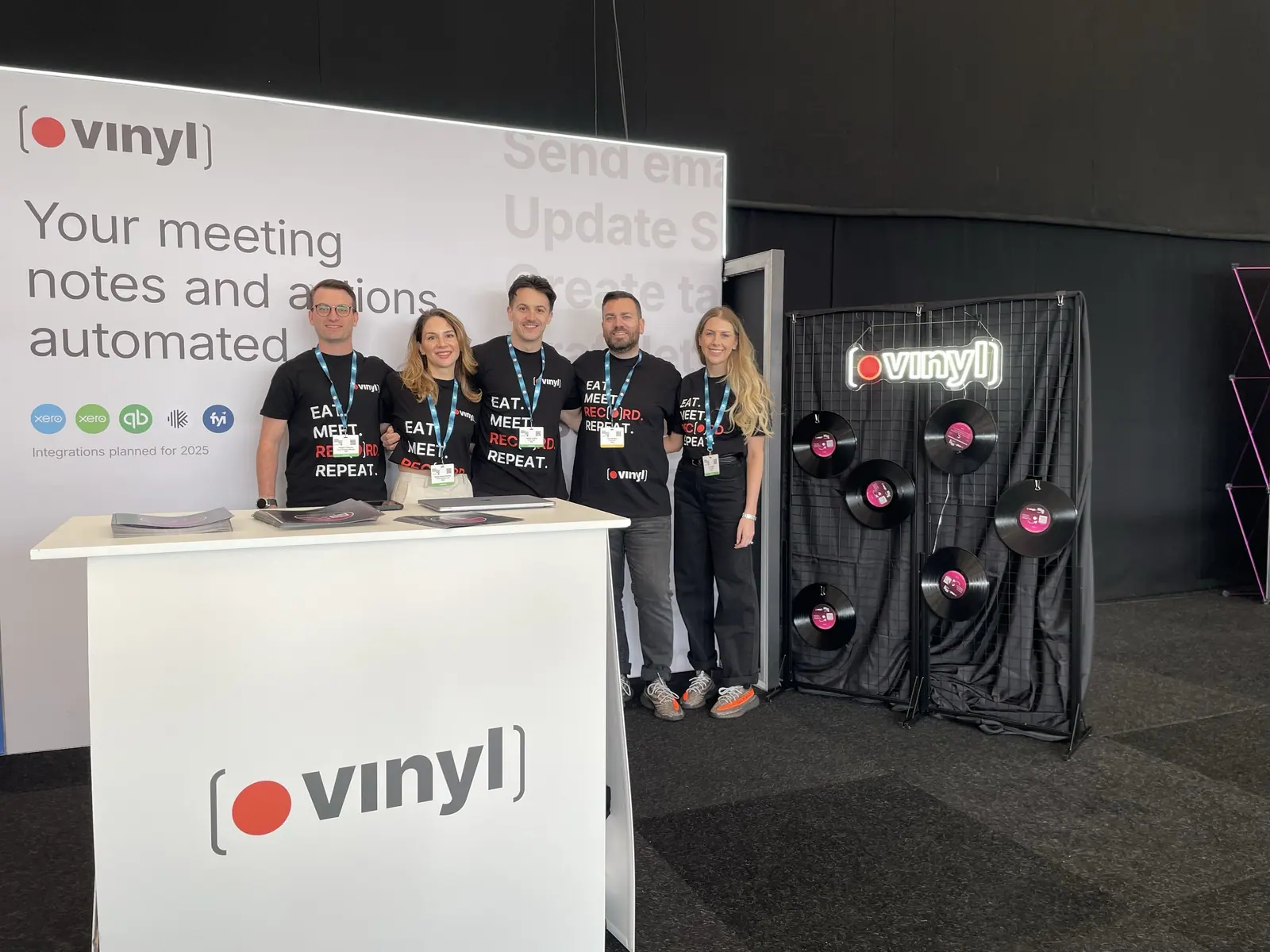
At DAS, Vinyl had presence.We had a stand with consistent branding. We had team members on the floor who knew the audience inside out. We had a clear message, a defined pitch, and a reason to stop by.
The results?
-
180+ people scanned at our stand
-
240+ people attended our pre-conference party
-
Dozens of conversations that turned into leads, meetings, and long-term interest
This wasn’t the first time people were hearing about Vinyl — and that was exactly the point.
Lesson: Don’t treat launch like a switch you flip. Choose a moment, build anticipation, and show up with intent.
5. We created buzz before the event
A lot of brands rely on the event itself to generate all the excitement.They assume people will stumble across their stand, hear their pitch, and sign up on the spot.
That’s not how it works.
If you want people to care at the event, they need to be primed before they walk through the door. And that’s exactly what we did in the lead-up to DAS.
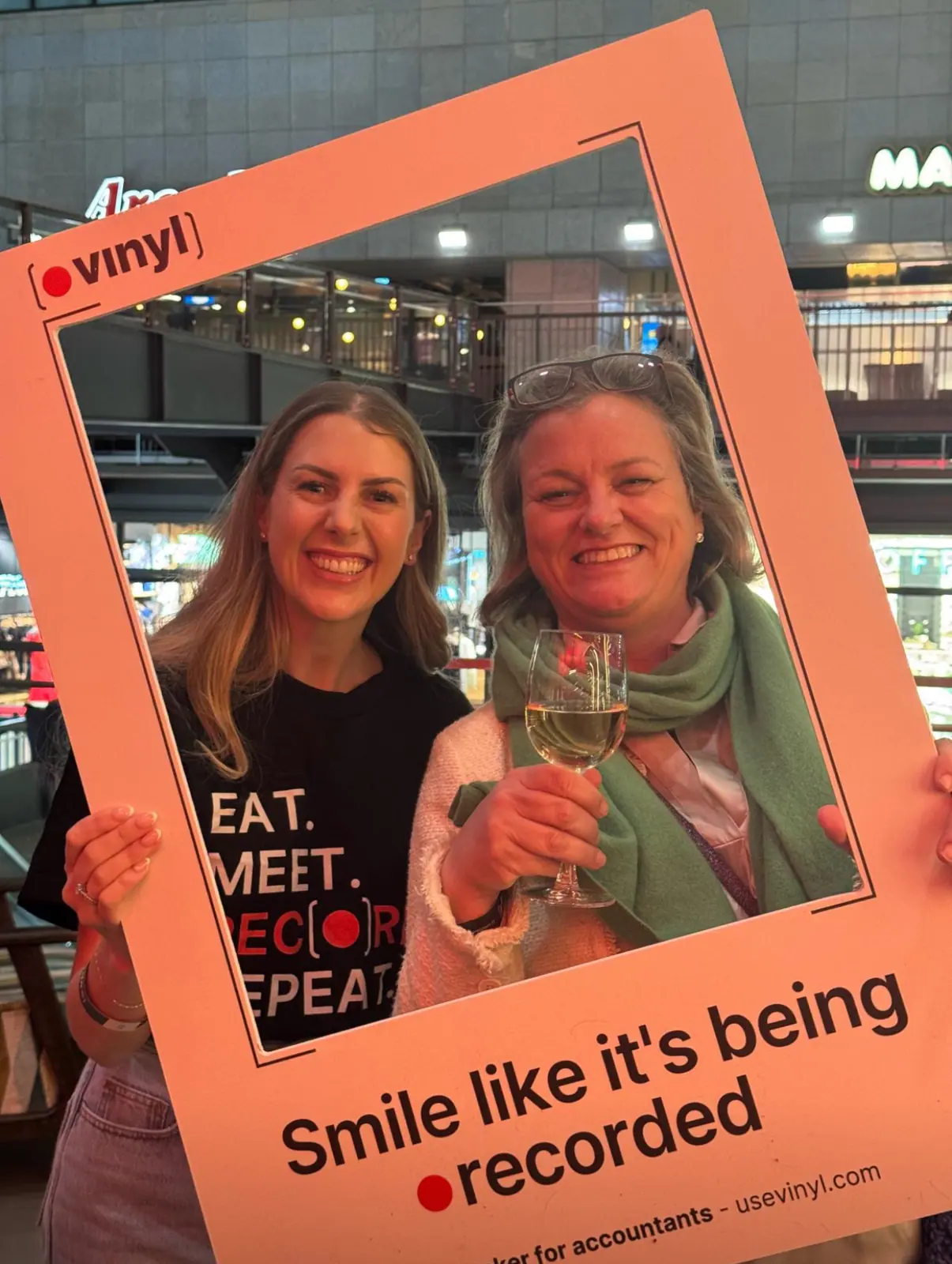
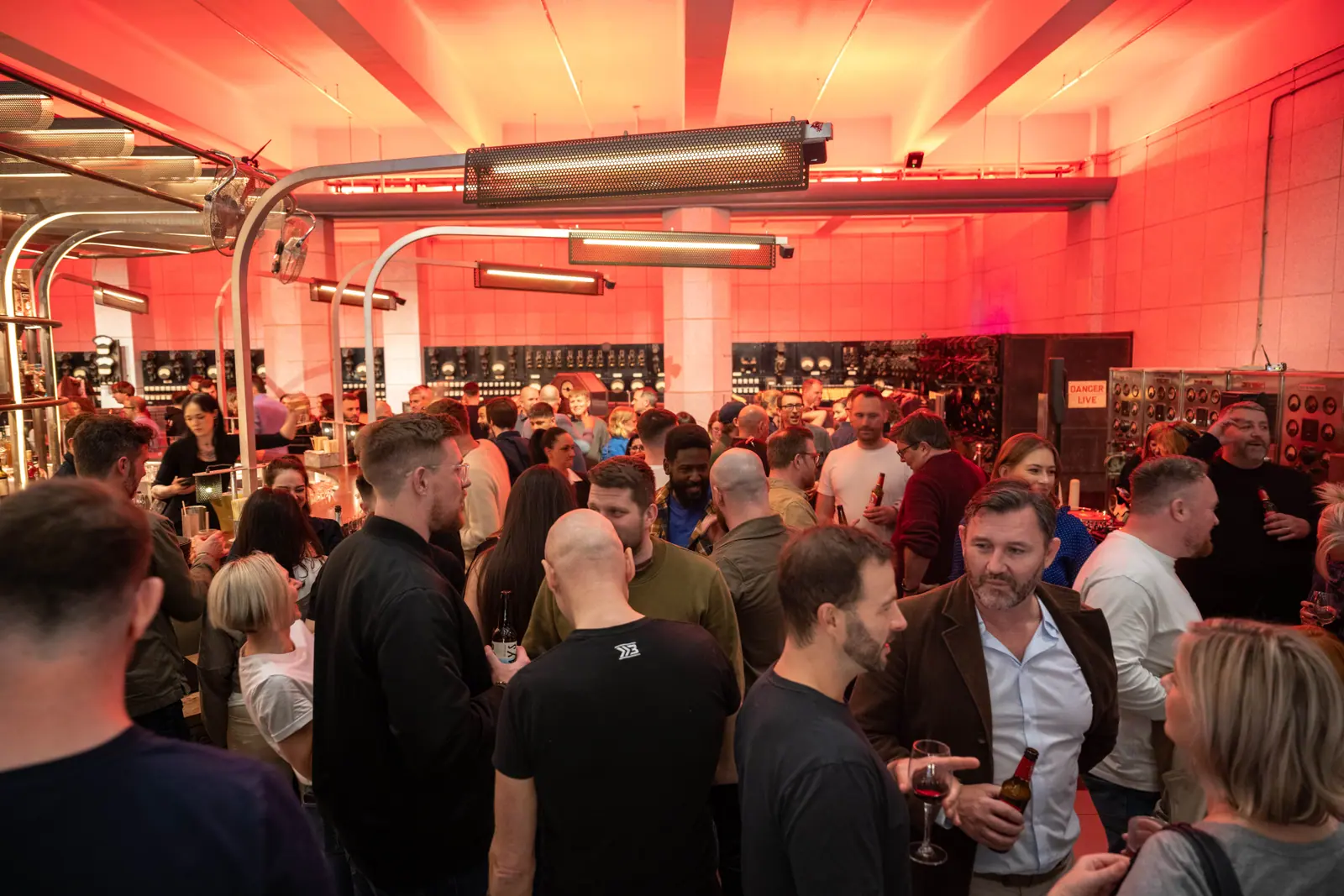
We kicked things off by hosting a pre-conference party the night before. It wasn’t a last-minute drinks catch-up — it was a planned experience. Branded, deliberate, and high energy.
Over 240 people RSVPed. Some were already on our waitlist. Others came because they were curious or had been hearing about Vinyl online. It created conversations before the expo even opened.
At the actual event, we made sure Vinyl wasn’t just a booth — it was part of the wider conversation.
We joined AI panels that directly aligned with the problems Vinyl solves. Instead of pitching the product, we talked about the challenges firms are facing with admin overload, unstructured meeting data, and post-meeting follow-ups — and how AI can step in and fix that.
Because people had seen the brand before, and heard the problem articulated clearly, they came to the booth with context. We weren’t starting cold — we were continuing a conversation.
By the time DAS opened its doors, we’d already created momentum. And people showed up ready.
Lesson: Your event ROI is won or lost in the weeks beforehand. Buzz isn’t something you hope for — it’s something you build deliberately.
6. We teamed up with creators and integration partners
We knew from the start that we didn’t want to be the only ones talking about Vinyl. If you want to build fast, you need other people telling your story too — and ideally, people your audience already trusts.
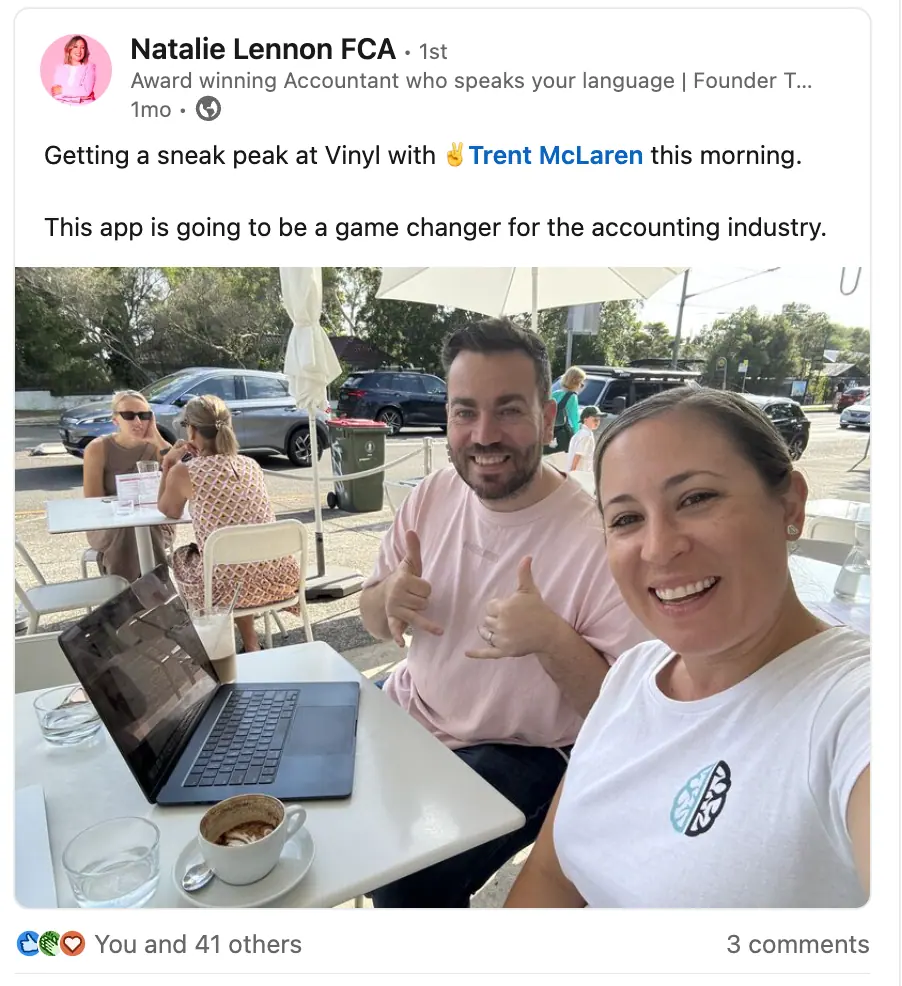
So we teamed up with industry creators and influencers — people already speaking to accountants, bookkeepers, and SaaS leaders on their own platforms.
In February, we joined webinars and podcasts, not to pitch, but to share the problem we were solving and how we were approaching it differently. No sales talk, just practical insight.
These sessions did two things:
-
They built credibility and trust in a non-salesy way.
-
They created content and reach beyond our own channels.
It was low-effort, high-trust visibility — and it worked.
At the same time, we were meeting with integration partners across the ecosystem. We showed them what we were building, how we’d integrate with their stack, and how we could help their users too.
The result? Some of those partners started referring people to Vinyl.We now get referrals every week, including from top 100 accounting firms and global networks. And we haven’t even launched publicly yet.
It’s a strong early signal — not just that people are interested, but that they believe in the value of what we’re doing enough to recommend it.
Lesson: If you’re the only one saying how good your product is, people tune out. Partner with others who already have trust and influence in your market — and give them a story worth sharing.
7. What this delivered (before launch)
A lot of SaaS teams wait until after launch to measure results.We didn’t.
Because when you build interest early, traction starts before the product goes live — and we’ve seen that play out across every part of Vinyl’s go-to-market journey.
Here’s what we achieved before public release:
-
320+ accounting and bookkeeping firms joined the waitlist
-
180+ stand scans at DAS from qualified leads
-
240+ RSVPs to our pre-conference party — a full room of target customers and partners
-
200+ people completed our problem validation survey, giving feedback that shaped the product
-
Multiple integration partners now referring clients to Vinyl
-
Consistent weekly referrals, including from top 100 firms and global networks
-
100,000+ impressions generated from organic content, partner collaborations, events, and creator-led channels
This didn’t happen by chance. There were no paid ads. No cold outreach campaigns.
This happened because we showed up early. We built in public. We invited people into the process. We picked our moment — and we owned it.
Vinyl wasn’t just a product launch. It became something people wanted to be part of. And that momentum has carried into everything we’ve done since.
Lesson: ROI doesn’t begin after launch — it starts when you show up consistently with something that matters.
Where to next
The full story of what we did for Vinyl is in the Vinyl case study. If you want the same approach applied to your launch, that’s demand generation and events working together — and here’s why most accounting events don’t work.
Final thought
Most SaaS companies focus all their energy on the product. Then they quietly launch and hope people notice.
That’s not how we do things at Journey.
With Vinyl, we built a brand before we launched the product. We created anticipation, not just features. We built community, not just a campaign. And the results speak for themselves — hundreds of firms on the waitlist, partner referrals, industry visibility, and actual momentum.
If you’re building something for the accounting and bookkeeping industry — and you’re serious about scaling — you don’t just need a GTM plan. You need attention. You need buy-in. You need a story people want to follow.
🚀 Want to be the next breakout brand in accounting tech? Work with us.
Journey is the go-to-market agency that helps accounting SaaS companies scale brand awareness and growth — fast.We know the industry. We know the people. And we know how to get your product in front of the right firms, at the right time, with the right message.
Let’s make your next launch the one everyone talks about.
Contact us today, let’s chat and see if we can help your brand become a household name in the accounting industry.
What the year after looked like: how we helped clients reach $17M in revenue. The framework underneath it is brand, demand, expand.