

Why do so many accounting tech vendors struggle to achieve consistent growth?
You may have noticed that your pipeline surges during major conferences or trade shows, then drops steeply afterwards. This uneven cycle not only creates stress but also prevents sustained progress.
If you recognise these ups and downs in your own marketing, you’re not alone. Many SaaS companies targeting accounting and bookkeeping firms fall into the same pattern. They invest in big events, collect leads, scramble to follow up, and watch interest fade until the next event. Meanwhile, large segments of the market remain unaware of their solution.
Does this sound familiar?
There are a few factors which cause this, which can ultimately be boiled down to one core problem…
A lack of investment in Brand Marketing.
Enter the Brand, Demand, Expand framework. This approach balances long-term brand awareness with short-term demand generation and ongoing customer growth.
In the sections that follow, we’ll explore how to apply this framework in accounting tech, ensuring you maintain a more stable, dependable, and profitable pipeline.
TL;DR
- Spiky growth is a brand problem. Pipelines that surge at conferences then collapse afterwards are the symptom of under-investing in brand marketing.
- Only 5% are in-market — but you sell to the 95%. The 95/5 rule says most buyers aren’t ready yet, so brand builds the mental availability that gets you shortlisted when they finally are.
- Brand, Demand, Expand works as one system. Brand earns long-term awareness, Demand captures active buyers, and Expand grows value from existing customers — you need all three, not just Demand.
- Measure brand on its own terms. Judge it by branded search, direct traffic and share of voice — not the immediate leads used to score demand.
- Plan year-round, not event-to-event. Consistent presence, industry alliances and customer advocacy compound into a steadier, more profitable pipeline.
The 95/5 rule: Why brand matters (Even when buyers aren’t ready)
Have you heard of the 95/5 rule? It proposes that at any given time, only about 5% of your target market is actively looking to buy. The other 95% isn’t in the market yet, and might not be for months, years, or even at all!
When that moment comes, they already have a shortlist of vendors in mind. How do they compile this list?
They do it through ongoing exposure to brands, content, and recommendations.
In accounting-tech, this trend is especially strong. Accountants and bookkeepers usually rely on referrals, peer feedback in Facebook communities, and brands they’ve come to trust well before they speak with sales.
If you delay brand-building until prospects are in-market, you’re too late. By that point, they already have their favourites. That’s why brand marketing - the steady effort to be known, trusted, and remembered - matters so much. It’s the half of demand generation most accounting SaaS vendors underfund.
Without it, you’ll likely compete on price or features alone, starting the race from behind.
**
_Personal Opinion: _**Advancements in AI have also made feature development faster than ever, reducing what used to be a months-long competitive advantage to just a matter of weeks. For example, look at how many OCR and invoice-capture tools have emerged in the past year alone. If features are so easy to copy, brand recognition becomes an even more crucial differentiator. But recognition is only one part. For your brand to be recognised AND remembered, you need distinctive brand assets that aid people’s recall.
Brand, demand, expand: An overview
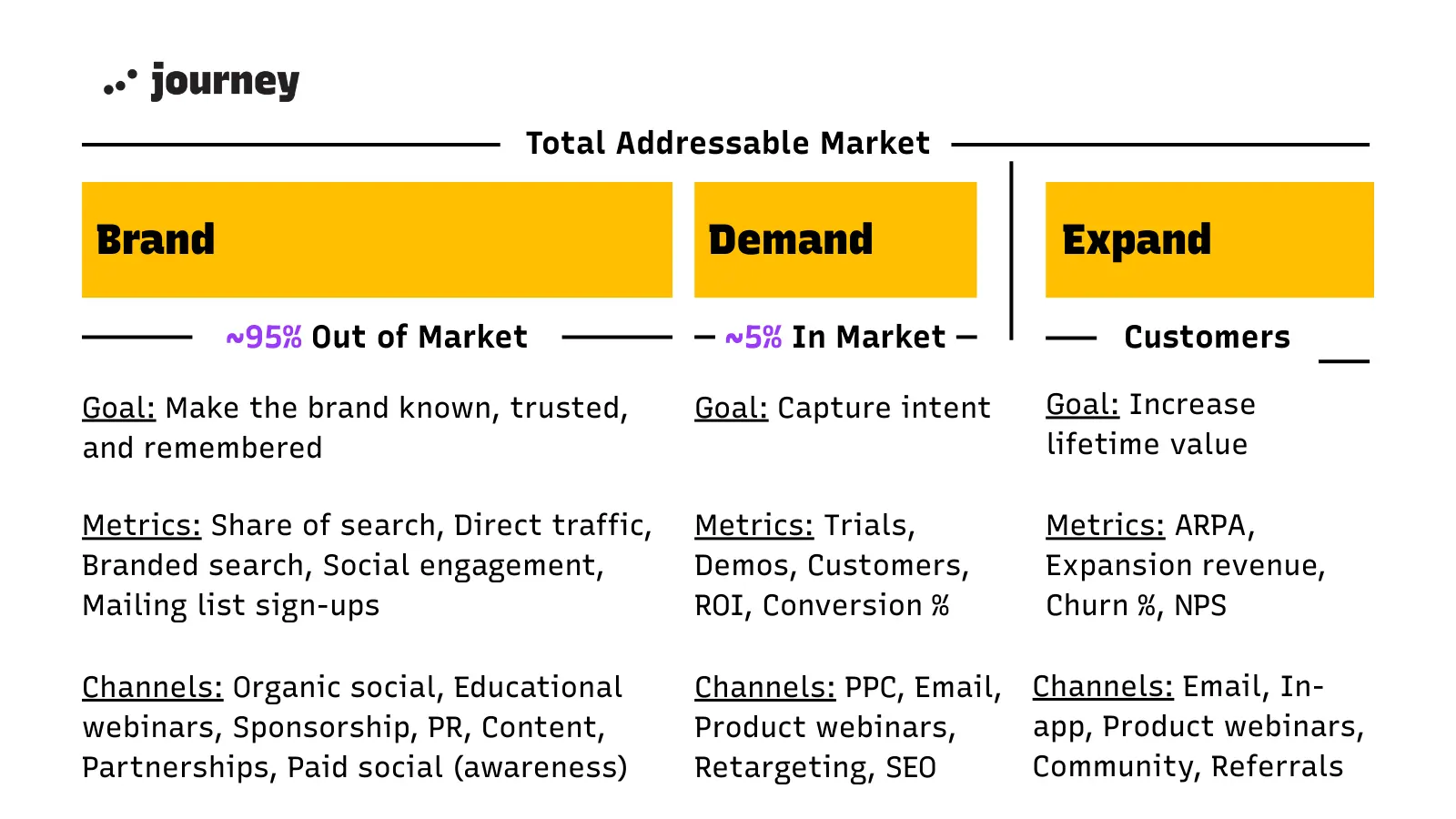
Essentially, Brand, Demand, Expand recognises the different objectives and timelines in marketing:
-
Brand – Ensuring people know who you are, trust you, and keep you in mind for the future.
-
Demand – Capturing active interest from those currently seeking a solution, then converting that into leads, pipeline, and revenue.
-
Expand – Maximising value from existing customers through retention, upselling, and advocacy.
Below is a visual representation of how these elements connect, the goals they set out to achieve, and the metrics and channels that support you in getting there.
Sense check - how many of you are only focused on one part i.e. Demand, and measuring all success from that? It’s a trap many fall into, so let’s look at how we can flip the table to focus more on Brand…
1. Brand: Playing the long game
Brand marketing is misunderstood by many. It goes far beyond good-looking logos and catchy headlines.
Crucially, it means being remembered for the right things. Generating clicks or views might make you known, but are you aligning your brand with the category entry points that matter? These are the cues that prompt buyers to recall your brand when they need a specific solution.
If we look at a category like Practice Management, a few examples of Category Entry Points could be:
-
[Internal] My firm is growing and I’m struggling to stay on top of all of the work and deadlines
-
[External] My existing PM solution just got acquired and I don’t like the acquirer so I’m looking to move
Brand marketing is about creating connections of your brand with these various category entry points so that when a cue presents itself, your brand is remembered and considered.
However many get this wrong by focusing on the wrong things…
Here’s a real-world example of how many are getting this wrong in accounting-tech today:
Right now, everyone’s talking about AI in their content because it gets high engagement. But do prospective customers link you to the actual challenges they face, or do they simply remember you as another AI-hype brand?
If your content doesn’t align with the problems you truly solve, you could be well-known for the wrong reasons. This means that when prospects do move in-market for a specific category, they don’t remember you.
The real goal is creating mental availability so that prospects naturally think of you when they need what you offer.
In the accounting sphere, where trust is paramount, brand awareness underpins reliable growth.
Why do certain vendors attract large crowds at events while others struggle?
Often, the successful ones have invested in brand awareness beforehand. Their name is familiar because they’ve published articles in popular accounting blogs, sponsored relevant webinars, or built alliances with respected figures. Industry media is one of the most reliable ways to do this — it’s part of why we built The Firm, our own publication for accountants and bookkeepers.
So when event attendees spot their logo, they’re already curious.
Unfortunately, many vendors measure brand-building with short-term demand metrics. If you rely on immediate leads to gauge brand success, you’ll be disappointed. While brand initiatives can generate some near-term results, they’re fundamentally about long-range impact.
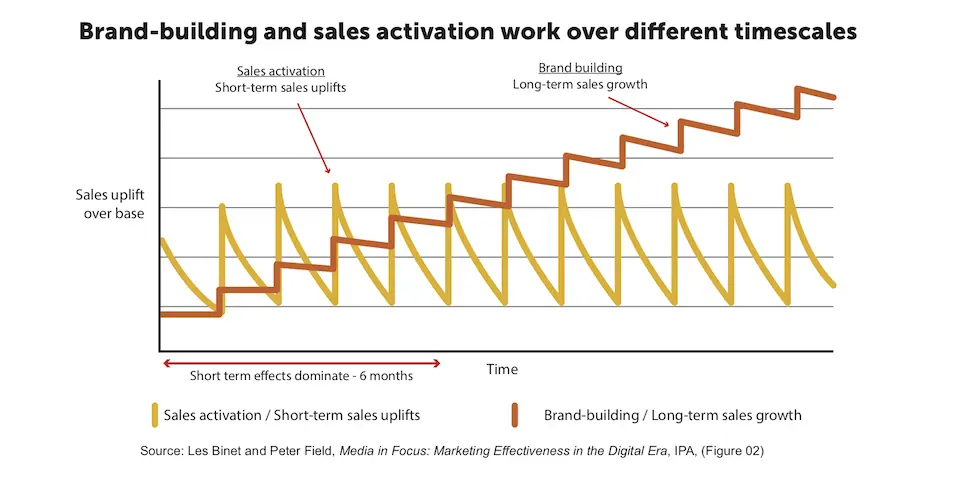
Look instead at branded search volume, direct site traffic, and share of voice to assess progress.
Remember: brand-building rarely feels urgent, but it’s essential. If you only chase immediate demand, you’ll constantly scramble for the next event or campaign, without compounding results.
Practical tips for brand marketing
-
Define clear brand associations: Identify the specific problems or opportunities in accounting that you want to ‘own’ in buyers’ minds. Make sure all your marketing content connects back to these issues.
-
Maintain consistent presence: Show up regularly where your audience spends time. Identify the right podcasts, blogs, conferences, and professional networks. Don’t just target all with a spray and pray approach. This isn’t a one-off exercise; aim for steady visibility.
-
Stay cohesive visually & verbally: Align your branding (logos, colour palette, messaging tone) across all channels. Inconsistent presentation erodes brand recall. Focus on distinctive brand assets that are easy to remember.
-
Leverage influencers & partners: Collaborate with well-known figures in the accounting world. Their endorsement can amplify trust. Don’t measure success here based on leads & sales. To get this right, it’s important to find the right influencers & partners who actually use your product and can talk about it honestly.
-
Track awareness metrics: Look beyond direct leads. Evaluate brand lift through metrics like branded search growth, share of voice, and direct traffic.
2. Demand: Reaching the 5%
Now, let’s consider the 5% who are actively shopping. Demand marketing aims to capture these prospects and guide them to purchase.
Here, you’ll use tactics like paid search, retargeting, email campaigns, and product demos.
Conferences and trade shows often support both Brand and Demand. They’re excellent for meeting buyers who are ready to act, but they also promote brand visibility to those who aren’t quite there yet.

The Apron stand is a great example here. Notice how they’re bold enough to just have a logo and nothing else? This is because they’ve worked tirelessly to build & grow their brand to the point that they’re 1) easily remembered, 2) distinctive & stand out, and 3) have queues of people coming to them at events ready to buy because of this
However, if you rely on events alone, you might struggle. Without prior brand awareness, you’ll see sparse booth traffic and fewer qualified leads.
When assessing event outcomes, don’t focus solely on ROI and customers won. Also consider the awareness aspects i.e. how many new contacts did you meet that might convert in the next 6, 12 or 18 months. How many more people saw your brand and it reinforced an existing connection?
Demand marketing becomes much more effective if you’ve already built brand familiarity. If you exclusively pursue the 5%, your sales might spike during event season and drop outside it.
Pair this with brand-focused activities, though, and you’ll nurture a smoother, more consistent pipeline.
Practical tips for demand capture:
-
Pinpoint in-market signals: Use intent data, keyword research, or platform insights (e.g., LinkedIn) to identify when prospects begin researching solutions. This lets you direct your campaigns at those who are actively exploring options.
-
Craft clear, persuasive offers: Whether it’s a product demo, a no-obligation trial, or a cost-savings calculator, your offer should speak to accountants’ specific challenges. Highlight quick wins or roi benefits.
-
Optimise conversion pathways: Keep forms simple, landing pages focused, and calls-to-action obvious. Reduce any friction that might cause potential buyers to drop off.
-
Nurture with precision: Use automated email sequences or remarketing ads to stay visible once someone shows interest. Provide relevant, helpful content - like case studies or industry benchmarks - based on their stage in the buying journey.
-
Leverage reviews & social proof: Encourage existing clients to leave testimonials on review sites (like xero/qb marketplaces, g2 or capterra).
-
Align sales & marketing: Ensure your sales team is ready to follow up quickly when leads engage. shared dashboards or alerts help you respond to high-intent signals faster.
3. Expand: Nurturing long-term customer value
You’ve won new accounting and bookkeeping clients—what now?
This is where Expand comes into play. It involves retaining and increasing value from your existing customers. In the tight-knit accounting community, satisfied users can become your biggest advocates.
Take the example of a forecasting app. A practice might adopt it first for a few clients. As they see positive outcomes, they extend usage across more clients.
That’s an upsell opportunity. And if these users refer colleagues at a local meet-up or industry event, that’s advocacy in action.
Effective expansion strategies include:
-
Customer education & marketing: Demonstrate how to use the product fully - advanced features, best practices, and troubleshooting.
-
Regular check-ins: Keep communication open to identify new opportunities or address any hurdles early on. Dedicated Customer Success, Partner Managers are a huge help here.
-
Community building: Encourage user groups, forums, or other spaces where clients can share insights and ideas, boosting loyalty.
In accounting-tech, positive word-of-mouth travels fast. If you maximise your existing customer relationships, you’ll reduce churn, boost revenue, and generate warm leads - all from your core user base. The structural version of this is control points — the integrations and workflows that make leaving genuinely hard.
Bringing brand and demand together
Some companies ask whether they should prioritise brand or demand first. The truth is, you need both.
If you invest in brand marketing, your demand campaigns perform better because prospects already recognise you. Conversely, robust demand efforts bring in new clients who can become vocal supporters and reinforce your brand.
It’s a virtuous loop, but ignoring brand can create a vicious one. Invest only in short-term demand tactics, and you’ll pay more for each lead and risk losing momentum when you pause spending.
Alternatively, pouring resources into brand alone without a plan to guide potential buyers means missed sales. People might know you, but they won’t know how to engage or purchase.
In short:
-
Brand focuses on long-term awareness.
-
Demand targets immediate opportunities.
-
Expand capitalises on existing relationships.
Applying it in the accounting-tech sector
How can you implement these ideas concretely?
-
Plan year-roundDon’t limit your entire approach to conference season. Develop a content and outreach calendar that covers the whole year, including smaller webinars or targeted email campaigns. This ensures visibility beyond the main event windows.
-
Form industry alliancesPartner with associations, influencers, or complementary software vendors your audience already trusts. This can include podcast appearances or co-hosted webinars. These alliances extend your reach to new audiences.
-
Build a reputation strategyGo beyond paid advertising. Can potential clients easily find you on Google? Do you appear in the newsletters and platforms accounting firms value? Make sure your brand is present in all the right spots.
-
Tailor your demand campaignsWhen you run direct-response ads (e.g., PPC or event sponsorship), address accountants’ specific issues. Showcase the key benefits of your product and how it compares to others. Clarify why your solution is indispensable.
-
Upsell, cross-sell, and delightOnce customers adopt your product, highlight further possibilities. Provide advanced training, share product enhancements, and encourage word-of-mouth referrals. Your current clients can be your most enthusiastic promoters.
Starting to feel clearer on next steps?
Sustainable growth in the accounting-tech channel may feel challenging, but it’s within reach if you balance your focus.
Relying solely on the 5% of in-market buyers leads to an uneven pipeline. By investing in Brand for the 95% who aren’t ready yet, Demand for those actively seeking a solution, and Expand to retain and grow current clients, you can build a steadier, long-lasting revenue engine.
Consider your current mix. Are you dedicating all resources to events season? Are your brand activities sporadic? Have you outlined a clear plan for nurturing and expanding existing customers?
By using the Brand, Demand, Expand framework wisely, you’ll stand out from competitors and lay the groundwork for consistent results.
_Need help with this? It’s what we live and breathe at Journey. Get in touch today to see how we can support you with growth. _
Two companions to this one: throwing away the SaaS marketing rulebook for the positioning argument, and control points for the retention half.